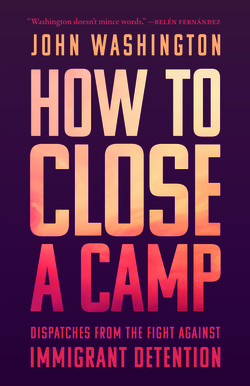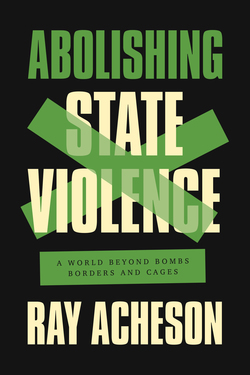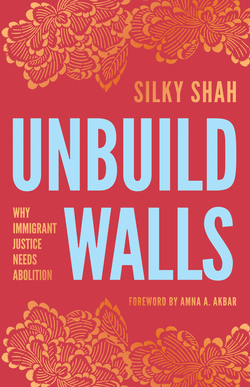
John Washington is a journalist covering the border, climate change, democracy, and more. He has written for The Atlantic, The Washington Post, The Nation, The Intercept, and other outlets. He is the author of The Case for Open Borders and The Dispossessed: A Story of Asylum at the US-Mexico Border and Beyond. Washington is also a translator of books by Anabel Hernandez, Sandra Rodriquez Nieto, and others. His most recent translations include The Hollywood Kid by Óscar Martínez and Juan Martínez, and Blood Barrios by Alberto Arce, which won a PEN Translates Award. Both were co-translated along with Daniela Ugaz. He lives in Tucson, Arizona.
ISBN: 9798888900727
Publication date: February 6, 2024
“In the burgeoning field of border studies, The Case for Open Borders will take its place beside the works of Wendy Brown, Jason Riley, and Suketu Mehta as a forceful voice in a deeply accusatory cause. For in the end its power lies less in prompting change (at least in the imminent future) than in advancing a compassionate and almost irrefutable ethical case. While climate change compels the Global South to pour its people northward, it is the North—by far the greater planetary pollutant—that has inflicted this suffering on them yet refuses to open its gates.” —New York Review of Books
“A powerful and convincing case for human solidarity and cooperation for which Washington provides a roadmap. Unlike many commentaries and books about the fraught border, he does not leave out the Indigenous communities whose homelands have existed in the area for centuries before the border was violently imposed by the United States in 1848.” —Roxanne Dunbar-Ortiz, author of Not “A Nation of Immigrants:” Settler-Colonialism , White Supremacy, and a History of Erasure and Exclusion
"John Washington makes a strong, eloquent and even inspiring case for the relaxation and ultimately the abolition of border controls." —JM Coetzee
"John Washington’s The Case for Open Borders is a compelling, empathetic argument, a far-reaching look into the origins of borders. Washington is one of our most thoughtful, creative, and humane journalists, and this new work will make people think differently about what they think they already know, about what divides and unites the world in new, surprising ways. Highly recommended." —Greg Grandin
"Perhaps the most profound book you’ll read this year. Washington cleaves through all the cruel obfuscations and militaristic cant that derange our border and immigration politics and offers a better human alternative. Borders will not save us, or our rapidly broiling planet, but Washington's reportorial courage and ethical clarity just might." —Junot Díaz
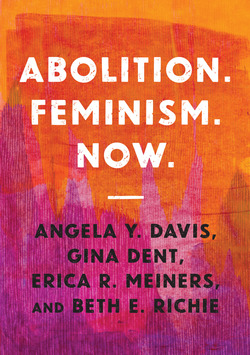
by Angela Y. Davis, Gina Dent, et al.
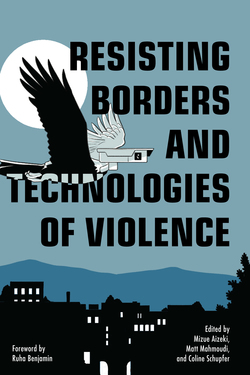
Edited by Mizue Aizeki, Matt Mahmoudi, et al.
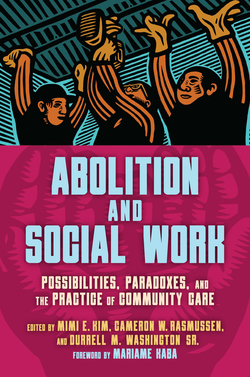
Edited by Mimi E. Kim, Cameron Rasmussen, et al.
One of the best ways you can support Haymarket is by becoming a member of our subscription program. Receive up to 40 books per year and help ensure the future of radical publishing.
Join today and start your subscription with one or more of these new books!